01
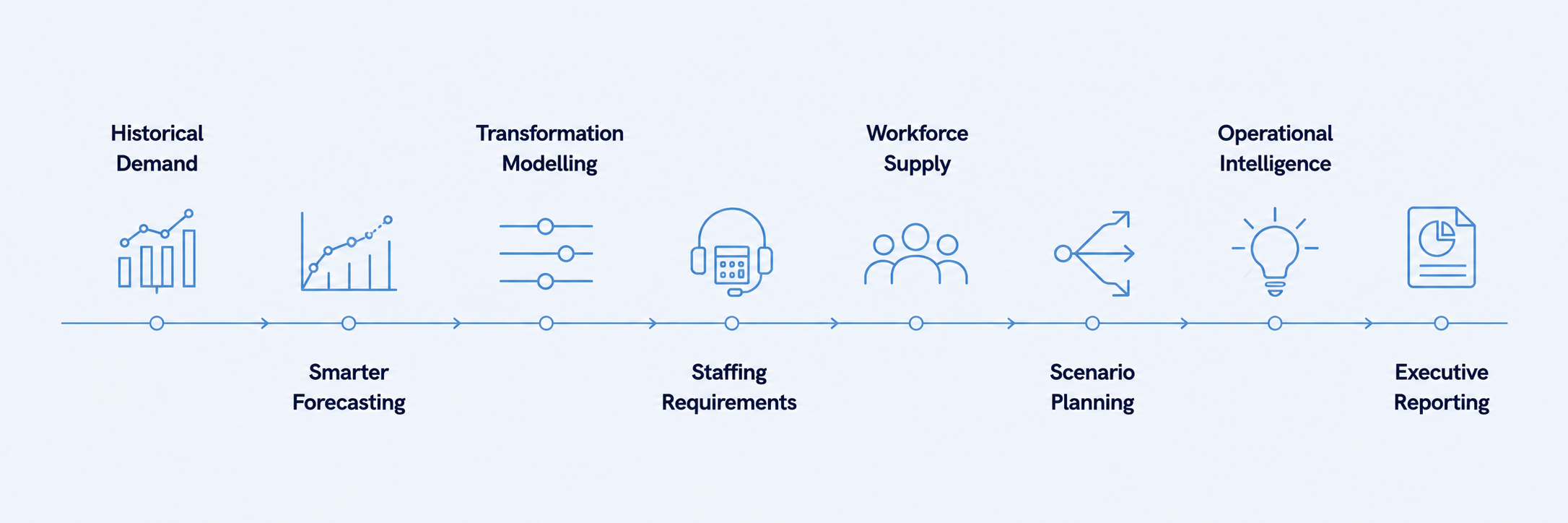
Smarter Forecasting
Compare forecasting methods against real
historical performance.
Evaluate multiple forecasting approaches
using anomaly detection, controlled
smoothing and historical backtesting.
Prescio recommends the strongest method for
each Queue while keeping planners firmly in
control.
02
Transformation Modelling
Understand the workforce impact before
change happens.
Layer planned operational change over the
baseline forecast to understand its effect
on demand, staffing requirement and future
risk, including phased benefits and delivery
dependencies.
03
Multi-skilled Workforce Planning
Plan the way operational teams actually
work.
Manage workforce supply at Department level
across multiple Queues, avoiding artificial
Queue-level precision while identifying the
demand streams driving the overall staffing
position.
04
Channel-specific Requirement
Calculations
Apply the right planning method to each
workload.
Calculate requirements using Erlang
simulation, Erlang curves, workload methods
and chat concurrency according to the
operational characteristics of each Work
Type.
05
Workforce Event Planning
Model how capacity really changes over
time.
Plan recruitment, attrition, ramp-up,
temporary resource, internal moves and other
workforce events to understand when capacity
becomes genuinely effective.
06
Scenario Modelling
Explore alternatives without disturbing
Production.
Test alternative forecasts,
transformations and requirement assumptions
against the agreed workforce position before
committing changes to the Production plan.
07
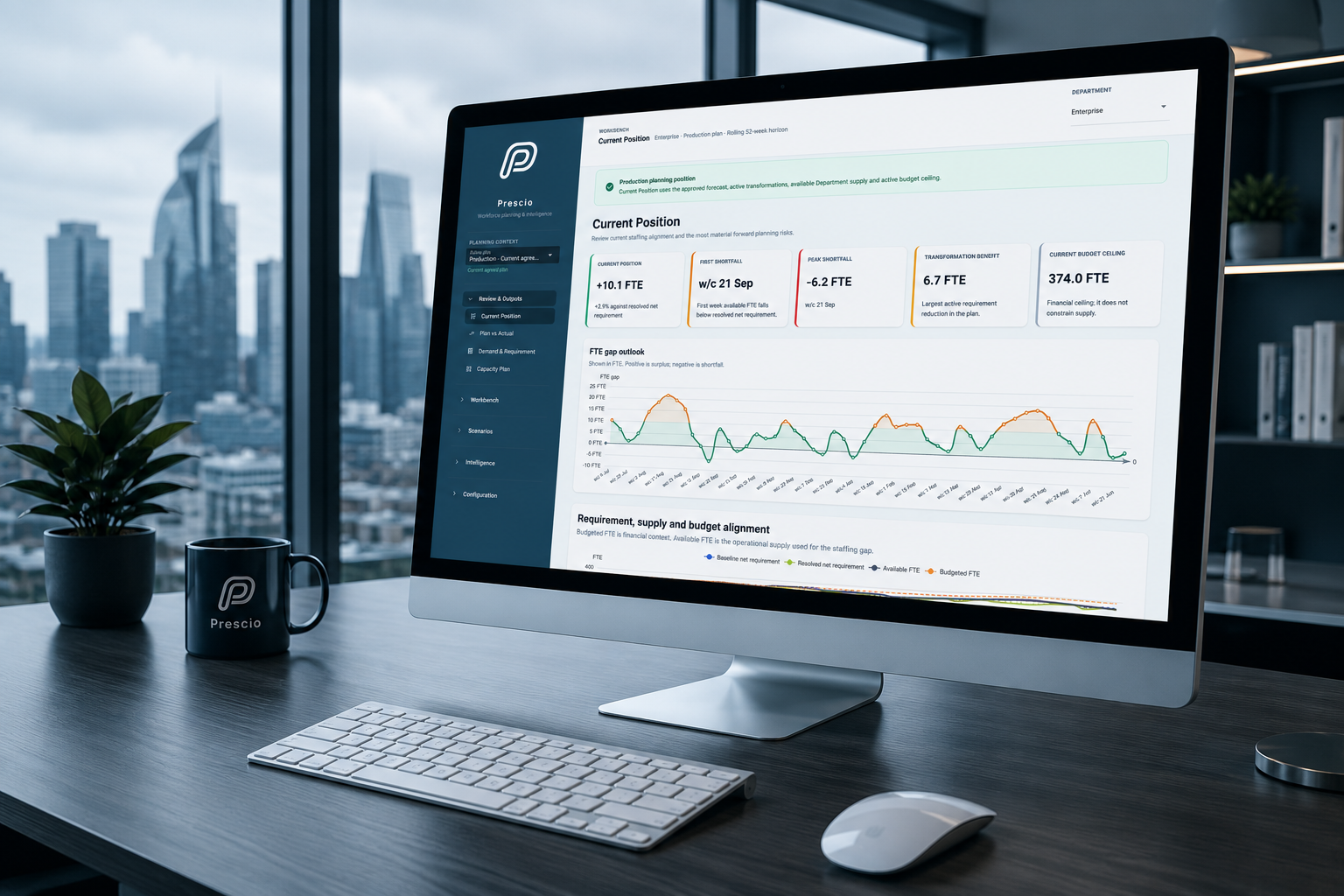
Capacity & Budget Alignment
Connect operational demand with workforce
and financial planning.
Bring requirement, effective supply,
workforce actions and budget together to
identify future staffing, affordability and
capacity risks.
08
Plan versus Actual
Understand how much confidence to place
in the plan.
Compare approved forecasts with actual
demand, AHT and SLA performance where
available, monitoring accuracy, bias and
tolerance breaches.
09
Operational Intelligence
Turn planning evidence into executive
insight.
Highlight workforce pressure, surplus
capacity, forecast confidence,
transformation dependency and leadership
priorities through evidence-based
intelligence and exportable executive
reporting.